The mother sitting across from me had done everything right.
She noticed the signs early and pushed for an evaluation. She worked with her insurance company and eventually secured a spot at an ABA clinic for her three-year-old son. Eighteen months later, she was back. Exhausted, confused, and no closer to the progress she’d hoped for. Her son had been receiving thirty hours of ABA therapy every week. He had a team of therapists who rarely spoke to each other. No one had looked deeper at the sleep problems that kept him up half the night, or the GI issues that were clearly driving some of his most challenging behaviors. Over the course of those 18 months, he received more therapy hours than most adults spend at work, but the underlying reasons he was struggling were never addressed.
This story is not unusual. Honestly, I hear versions of it all the time. It’s the predictable outcome of a payment system that was never designed to produce results.


From Blind Spots to Better Outcomes: How SNF Data Transparency Strengthens LTSS
What if health plans could identify member decline before an avoidable hospitalization occurs? Real-time clinical visibility into long-stay SNF members uncovers risk earlier and drives better outcomes.
The fee-for-service problem
Autism care in America is in crisis and the payment model is a significant reason why. State Medicaid spending on ABA therapy has exploded over the past decade. In Indiana, spending rose from $21 million in 2017 to $611 million in 2023. North Carolina is projected to see a 423% increase between 2022 and 2026. Nationally, the economic burden of autism is projected to reach $461 billion annually, which is on par with some of the most expensive chronic conditions in the country.
And yet, outcomes have not kept pace with spending.
Fee-for-service reimbursement doesn’t pay for results. It pays for hours. In autism care, that has created the wrong incentive: the more therapy hours a provider bills, the more revenue they generate, regardless of whether those hours are producing meaningful progress for the child. The result has been a proliferation of ABA-only centers prescribing maximum hours to virtually every child, regardless of clinical need. Too often, it becomes one-size-fits-all care, driven more by billing codes than by what is best for the child.

Why Pharma Companies Should Look To Social Media For Better Patient Insight
Healthcare decision-makers, especially at pharmaceutical companies, must prioritize patient input. Data collected from social media listening is a significant step in the right direction.
The clinicians working in this system are often deeply committed to their patients. The problem is the system itself which rewards the quantity of time and largely ignores the quality of the treatment’s impact.
What value-based care changes
Value-based care flips that incentive entirely. Instead of paying for hours delivered, payers are reimbursed based on measurable outcomes, such as developmental progress, family functioning, and reduced crisis utilization. The question shifts from “how many hours did this child receive?” to “how is this child actually doing?”
When outcomes are measured and rewarded, providers are incentivized to ask different questions at the outset. Providers start by asking what’s actually driving a child’s challenges. In many cases, there are medical contributors like sleep disorders, GI symptoms, or nutritional or metabolic issues that behavior therapy alone won’t address. The focus shifts to what this particular child needs, not what the billing system defaults to.
This is how almost every other field of medicine already operates. An oncologist does not prescribe the same chemotherapy protocol to every patient with cancer. A cardiologist does not recommend the same intervention to every patient with heart disease. They evaluate the individual, identify the underlying mechanisms, and design a personalized, multifaceted care pathway. Autism care should be no different.
When you build a care model around that principle, and align payment to outcomes rather than volume, the results are striking. In our clinical experience, an integrated, whole-child model that addresses medical, behavioral, and developmental needs together produces significantly better outcomes than ABA-only care and does so with dramatically fewer therapy hours. Children make faster progress. And the total cost of care comes down substantially – not because services are being cut, but because the right care, delivered early and in an integrated way, is far more efficient than high-volume siloed care delivered without a coherent clinical rationale.
What payers need to understand
Payers are increasingly aware that the current model is unsustainable. State Medicaid programs are cutting reimbursement rates in response to ballooning costs. This is a move that, however understandable from a budget standpoint, risks stripping families of access to services that their children genuinely need without fixing the underlying problem.
Cutting rates isn’t reform. It just shifts the cost somewhere else. And they will not bend the curve in any meaningful or lasting way.
What will bend the curve is moving from volume-based to outcomes-based reimbursement. This involves partnering with providers who can demonstrate better results at a lower total cost and building payment models that reward that performance. A child who receives the right integrated support early is far less likely to cycle through emergency departments, inpatient psychiatric facilities, and crisis services in adolescence and adulthood. Investing earlier changes the trajectory and avoids far more costly care later on.
The pressure on the system is becoming impossible to ignore. Payers, providers, and policymakers are all feeling the pressure of a system that is costing more and delivering less. The path forward is not to double down on what isn’t working, and it is not simply to cut what exists. It is to redesign, building payment models that finally align financial incentives with clinical outcomes, and holding providers accountable for results rather than for hours billed.
The mother sitting across from me didn’t need more hours. She needed someone to ask better questions. Her son deserved that. Every child does.
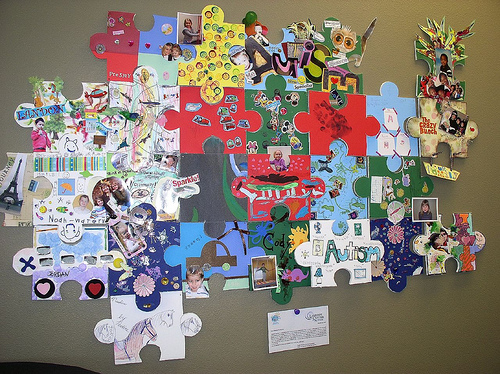
Image: Flickr user Kathleen Leavitt Cragun

Suzanne Goh, MD, BCBA, is a board-certified pediatric neurologist, behavior analyst, neuroscience researcher and author. She is dedicated to researching and developing therapies for neurological conditions that impact childhood brain development. Specializing in treatment of autism, she is the founder of Cortica, and creator of the Cortica Care Model. Dr. Goh instructs physicians and medical professionals in best practices for the neurological care of autism and related conditions. She previously served as co-director of the Developmental Neuropsychiatry Clinic for Autism and Related Disorders at Columbia University where she led a multi-disciplinary team specializing in the diagnosis and treatment of autism.
Dr. Goh published the book Magnificent Minds, a resource for understanding autism. Her research has also been published in neuroscience journals, including Neurology, Annals of Neurology, Pediatric Neurology, & Developmental Medicine & Child Neurology. Dr. Goh attended Oxford University as a Rhodes Scholar and graduated Harvard Medical School, cum laude.
This post appears through the MedCity Influencers program. Anyone can publish their perspective on business and innovation in healthcare on MedCity News through MedCity Influencers. Click here to find out how.