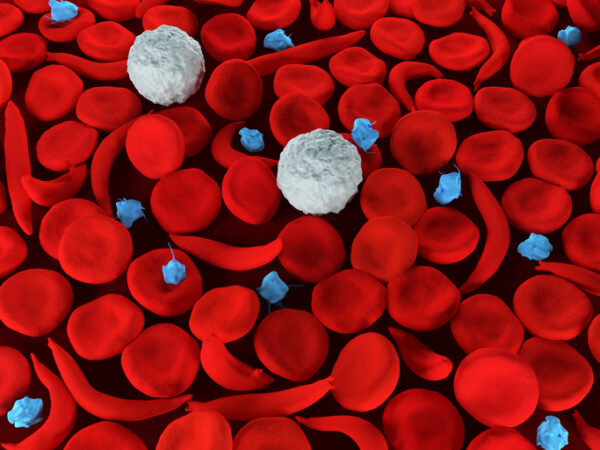
With few treatments available for sickle cell disease, encouraging early clinical data for a Fulcrum Therapeutics drug made it one to watch. But another medicine from the same drug class was recently withdrawn from the market due to the risk of causing cancer, and heightened FDA concerns about a potential class-wide risk now leaves Fulcrum with no regulatory path forward for its molecule.
Based on the FDA’s feedback, Fulcrum decided to discontinue development of its drug, pociredir, the biotech announced after Monday’s market close. Cambridge, Massachusetts-based Fulcrum said it plans to explore “strategic alternatives” that could include a merger, acquisition, or a sale of its assets. As of the end of the first quarter of this year, Fulcrum said its cash position was $333.3 million.
Fulcrum developed drugs to modulate gene expression to address root causes of genetic diseases. Pociredir is an oral small molecule designed to inhibit PCR2, a protein complex that regulates gene expression. The Fulcrum drug is specifically designed to block a particular protein of PCR2 that represses expression of fetal hemoglobin, a type of hemoglobin that does not form into the abnormal sickle shape that drives sickle cell disease.

The Hidden Administrative Tasks Draining Small Practices
Small practices play a critical role in healthcare delivery, but they cannot continue to absorb ever-increasing administrative demands without consequences.
In February, Fulcrum reported Phase 1b data showing pociredir led to rapid increases in fetal hemoglobin as well as reductions in signs and complications of sickle cell disease. Results also showed the study drug was safe and well tolerated with no serious adverse effects. Based on these encouraging data, Fulcrum said at the time it planned to start another clinical trial in the second half of this year with the potential to support an application seeking FDA approval. Those plans ran into a wall at the FDA.
In a recent meeting to discuss pociredir’s Phase 1b results, Fulcrum said the FDA expressed concerns about the drug’s benefit-risk profile in sickle cell disease. That concern was not based on the Fulcrum drug’s trial results, but on outcomes for patients treated with Tazverik, an Ipsen drug that had received accelerated FDA approvals for the cancers follicular lymphoma and epithelioid sarcoma. Data from Tazverik’s confirmatory study showed higher rates of secondary blood cancers following treatment. In March, Ipsen voluntarily withdrew the drug from the market globally.
Like Fulcrum’s pociredir, Ipsen’s drug is also a PCR2 inhibitor, but it addresses a different target on that protein complex. Fulcrum said it submitted information to the FDA showing the differences between the two targets, adding that their different biological roles are relevant to the benefit-risk assessment of pociredir.
According to Fulcrum, the FDA considered the biotech’s information but concluded that any pharmacological intervention targeting the PRC2 complex carries equivalent cancer risk regardless of the specific subunit of PCR2 engaged by a drug. The company added that the FDA’s position was informed by previous cancer observations from preclinical tests of pociredir. That risk led to an FDA clinical hold in 2023 that was eventually lifted to permit resumption of Phase 1b testing. In Fulcrum’s Monday announcement, CEO Alex Sapir said malignancies associated with Tazverik raised FDA concerns about the risk that inhibiting the PRC2 complex could cause cancer.


Closing the Quality-Affordability Gap in Workplace Mental Health
In an interview, Kyan Health Co-Founder and Chief Commercial Officer Konstantin Struck discussed how Kyan gives mid-market and enterprise employers access to premium workforce mental healthcare, at a price point that is affordable.
“We arrived at this [discontinuation] decision after discussion with the FDA, and despite robust elevations in fetal hemoglobin seen with pociredir and the potential for clinical benefit, we do not see a path forward with pociredir,” Sapir said in a prepared statement.
In a Tuesday research note, Leerink Partners analyst Joseph Schwartz said the FDA’s position was surprising, considering the clinical efficacy observed for Fulcrum’s drug, its safety, and the need for new treatments for patients with severe sickle cell disease, a disorder that’s associated with substantial mortality, recurrent complications, and progressive organ damage. Schwartz added that the FDA has known about the cancer risk of PCR2 blocking drugs for years, but permitted Fulcrum’s trial to continue under modified criteria.
“Today’s outcome, which will not even entertain Phase 3 development, suggests a more definitive shift in the FDA’s view of the PRC2 class following recent data related to Tazverik,” Schwartz said.
Sickle cell disease does have some new treatments. The 2023 FDA approvals of Vertex Pharmaceuticals’ Casgevy and Lyfgenia from Bluebird Bio (now Genetix Biotherapeutics) introduced gene therapies as one-time treatment options. But these therapies require an intensive preconditioning regimen and they’re also expensive. Another one-time treatment option could be on the way. Beam Therapeutics’ ristoglogene autogetemcel, or risto-cel, uses base editing to make genetic changes that increase production of fetal hemoglobin. Beam has said it expects to file a biologics license application as early as the end of 2026.
Sickle cell disease drug research has also encountered setbacks. In 2024, Pfizer voluntarily withdrew its drug Oxbryta from the market after post-marketing clinical testing showed higher rates of complications and deaths in the drug arm compared to the placebo group. Last summer, Pfizer reported a different sickle cell drug, inclacumab, failed its Phase 3 study.
Image: Meletios Verras, Getty Images