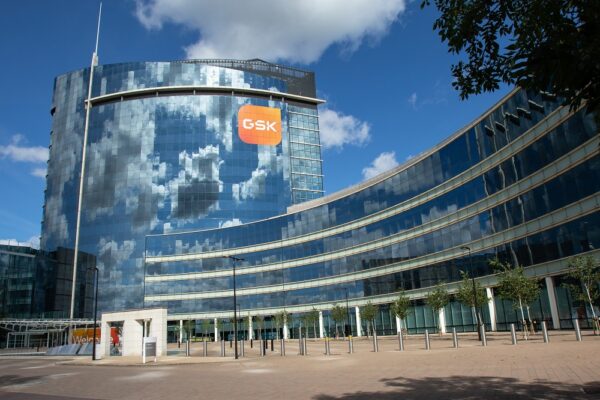
GSK’s oncology strategy had focused on gynecological and blood cancers, but the pharmaceutical company is striking deals that broaden its scope. It’s making a big move in lung cancer, announcing Tuesday a $10.6 billion deal to acquire Nuvalent, a company with two targeted therapies currently under FDA review, each offering blockbuster sales potential.
Both Nuvalent drugs are small molecules that hit non-small cell lung cancer (NSCLC) targets already addressed by available therapies, but with potential advantages. Zidesamtinib is an inhibitor of tyrosine kinases, cancer-driving enzymes stemming from a ROS1 mutation. Nuvalent has said zidesamtinib can address challenges that may limit other drugs for ROS1-driven cancers, including drug resistance, central nervous system adverse events, and the spread of the cancer to the brain.
Zidesamtinib is currently under FDA review as a treatment for ROS1-positive NSCLC in patients who have received at least one prior ROS1 tyrosine kinase inhibitor. An FDA decision is expected by Sept. 18. An ongoing clinical study could support an application seeking approval as a first-line treatment for ROS1-positive NSCLC.

The Power of Real World Data to Study Women’s Health at Scale
Veradigm examines key clinical trends, comorbidity profiles, and treatment trends across adolescence, reproductive years, and peri-/post-menopause. Download it today!
The second Nuvalent drug, neladalkib, was developed to treat NSCLC stemming from rearrangements of the ALK gene. There are six FDA-approved tyrosine kinase inhibitors for ALK-positive NSCLC. The standard of care for ALK-positive NSCLC patients naïve to this drug class is Roche’s Alecensa. The second-line treatment is the Pfizer drug Lorbrena. Nuvalent’s neladalkib is a selective ALK inhibitor that the company says is designed to remain active in tumors that have developed resistance to first-, second-, and third-generation ALK inhibitors. It’s also designed to penetrate the brain to address brain metastases. Late last month, the FDA accepted Nuvalent’s new drug application for neladalkib, setting a Nov. 27 target date for a regulatory decision.
Nuvalent also brings GSK an early-stage HER2 inhibitor, currently in Phase 1 testing for HER2-altered NSCLC. In a prepared statement, GSK CEO Luke Miels said the Nuvalent acquisition is consistent with the pharma company’s approach to add assets that hit clinically proven targets and also address gaps in efficacy and tolerability.
“The two lead products are potential best-in-class assets that could launch this year if approved by the FDA and offer significant new treatment options to patients with two forms of non-small cell lung cancer,” Miels said.
Oncology is currently a relatively small part of GSK’s portfolio, accounting for £1.97 billion (about $2.63 billion) of the company’s £32.66 billion (about $43.69 billion) in 2025 revenue, according to the company’s annual report. GSK has identified the multiple myeloma drug Blenrep as a key driver of future revenue growth. Blenrep returned to the market last year following FDA approval as a third-line treatment and European Union approval in the second-line setting. Global clinical trials are ongoing that could support applications seeking to expand Blenrep to earlier lines of multiple myeloma treatment.

The Hidden Administrative Tasks Draining Small Practices
Small practices play a critical role in healthcare delivery, but they cannot continue to absorb ever-increasing administrative demands without consequences.
A different ADC gives GSK an opportunity to grow in lung cancer, complementing the incoming Nuvalent assets. In 2023, GSK licensed global rights, excluding China, to HS-20093, a Hansoh Pharma ADC in development for solid tumors. That drug, now known as risuvatug-rezetecan (ris-rez for short), is designed to target B7-H3, a protein expressed by many types of cancer. The most advanced clinical trial for this drug is a Phase 3 test in extensive-stage small cell lung cancer. GSK also has ongoing early stage studies evaluating this ADC in a range of solid tumors. GSK had previously licensed rights to a B7-H4-targeting ADC from Hansoh in development for gynecologic malignancies; Phase 1 studies are ongoing.
GSK added gastrointestinal cancer to its pipeline last year through the $1 billion acquisition of IDRx. The lead IDRx program, a KIT-targeting tyrosine kinase inhibitor now called velzatinib, is in Phase 3 testing for gastrointestinal stromal tumors (GIST).
The Nuvalent acquisition agreement calls for GSK to pay $124 in cash for each share of the Cambridge, Massachusetts-based biotech. The purchase price represents a 40% premium to Nuvalent’s closing stock price on Monday and a 26% premium to its average price in the past 30 days. When Nuvalent went public in 2021, it priced its shares at $17 each. Taking into account the cash that Nuvalent brings, GSK’s financial outlay will be about $9.4 billion.
Photo by GSK