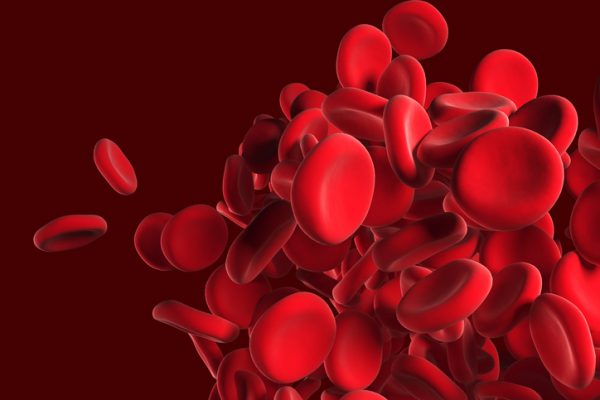
A rare type of anemia that can become fatal now has its first FDA-approved therapy, a Johnson & Johnson drug whose mechanism of action addresses the underlying driver of this disease.
The regulatory decision announced after Monday’s market close covers use of nipocalimab, brand name Imaavy, for treating patients age 12 and older with warm autoimmune hemolytic anemia (wAIHA). It’s an expanded approval for the intravenously infused drug, which was initially approved last year as a treatment for generalized myasthenia gravis. Imaavy’s potential to address a wide range of immunological indications has J&J projecting the product could achieve $5 billion in peak sales.
The anemia that develops in wAIHA stems from pathogenic autoantibodies that destroy red blood cells. It’s called “warm” because this process occurs at normal body temperature (another type of anemia called cold agglutinin disease develops in cold temperatures). In severe cases, the burden the disease places on the heart and lungs can become life threatening.

From Blind Spots to Better Outcomes: How SNF Data Transparency Strengthens LTSS
What if health plans could identify member decline before an avoidable hospitalization occurs? Real-time clinical visibility into long-stay SNF members uncovers risk earlier and drives better outcomes.
The standard of care for wAIHA has been corticosteroids and immunosuppressants that broadly suppress the immune system without specifically addressing the autoantibodies that drive the disease. Imaavy is a monoclonal antibody designed to bind to neonatal Fc receptor (FcRn), a protein that keeps pathogenic immunoglobulin G antibodies (IgG) circulating in the body. By blocking FcRn, more IgG antibodies end up being degraded rather than recycled into circulation.
J&J’s regulatory submission for Imaavy in wAIHA was based on data from a Phase 2/3 study that enrolled 115 participants. Results showed a statistically significant durable hemoglobin response measured at 24 weeks compared to a placebo. The most common adverse reactions were peripheral edema, diarrhea, and fever. Full results were presented in June during the annual meeting of the European Hematology Association.
“As the first therapy approved for wAIHA, Imaavy has the potential to redefine the management of wAIHA, particularly for those with uncontrolled disease,” J&J Global Immunology Therapeutic Area Head David Lee said in a prepared statement.
Sales for Imaavy are not yet large enough for J&J to break out in its financial reports. But the company does point to that product as well as the new oral plaque psoriasis drug Icotyde, approved in March, as drivers of revenue growth together with other immunology assets that are also not yet broken out separately. These immunology assets accounted for $150 million in global revenue in the first half of 2026 compared to $9 million in the same period last year.

Where Will AI Deployment Benefit Payers the Most?
We are taking a look at how health insurers are using AI, defining success, and managing cybersecurity risks. Give us your opinions by completing our brief, anonymous survey.
Imaavy was originally developed by Momenta Pharmaceuticals, which J&J acquired for $6.5 billion in 2020. J&J has a broad ongoing clinical program for Imaavy, spanning rheumatologic diseases, rare autoantibody diseases, and maternal fetal diseases mediated by maternal alloantibodies.
Image: virusowy, Getty Images