
Your Healthcare AI Strategy Is Probably an Architecture Problem
These three patterns keep showing up, and each is much cheaper to prevent than to fix later.
These three patterns keep showing up, and each is much cheaper to prevent than to fix later.

These tools are worth implementing. They are not worth implementing without the right preparation.

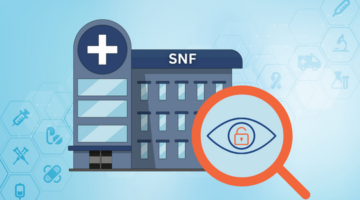
What if health plans could identify member decline before an avoidable hospitalization occurs? Real-time clinical visibility into long-stay SNF members uncovers risk earlier and drives better outcomes.

We aren't killing the problem that fax created. We are migrating it into a format that carries a higher expectation of automated processing — without yet having solved the underlying challenge that made automation hard in the first place.

Before policymakers, employers, insurers, or taxpayers commit ever-larger sums to the system, an uncomfortable question deserves attention: How much additional capacity does healthcare actually need and what measurable outcomes should society expect in return?

AI built on transparent, causal reasoning, systems that ground every output in validated biological mechanisms, show the pathway behind each recommendation, and cite their sources is what makes the difference between a tool that erodes clinical trust and one that rebuilds it.

It’s not low effort or underinvestment. It’s the steady-state output of an organization succeeding at the wrong thing.

Enterprise EHR boosts scalability, interoperability, and governance for large healthcare systems.

They are vast, deep, and nearly impossible to navigate without the right clinical lens applied on top. The real challenge facing health data platform companies and health system data teams is what to do with all of it.

AI isn’t failing because it lacks capability. It’s failing because it isn’t consistently reaching the moments where decisions are made.

AI adoption in healthcare isn't being led by innovation teams, it's the clinicians

Organizations that are experiencing significant improvements related to AI are not necessarily using more advanced tools. They are just using the tools they have with more intention.


Healthcare payments are no longer about transactions. It’s about controlling the revenue cycle. And increasingly, that control is not sitting with ISOs.
Appeals and grievances reflect how well a health plan functions under pressure. They also show how effectively your organization can surface, prioritize, and resolve the cases that matter most.

We’re entering uncharted territory if bad actors can both launch zero-days and exploit unaddressed backdoors with new efficiency. This is why teams need to unify their network structure and better forecast what they’re up against.

We do not need models that pretend every patient has equal or equitable access to care. We need models capable of recognizing disparities and responding to them.
The future of healthcare depends on enterprises moving decisively beyond the pilot trap by treating enterprise AI as a platform capable of sustaining hundreds of dynamic models.

AI documentation tools are genuinely useful. But they are treating a symptom, not the disease. The disease is that physicians have lost control over how they work.