
Modernizing Payment Integrity in an Era of Systemic Fraud
Gaps in reimbursement oversight and recovery will only widen, unless plans modernize how they detect, investigate, and recoup improper payments.
Gaps in reimbursement oversight and recovery will only widen, unless plans modernize how they detect, investigate, and recoup improper payments.

Rural hospitals need trained people, tested backups, downtime procedures, clinical continuity planning, and staff who know what to do when an alert fires. A framework won’t substitute for that work, but it helps organize it and makes progress measurable.
We are taking a look at how health insurers are using AI, defining success, and managing cybersecurity risks. Give us your opinions by completing our brief, anonymous survey.

Most healthcare organizations are experimenting with AI. Few are preparing to manage AI agents as participants in everyday healthcare workflows.

Most younger professionals entering the workforce have little visibility into interoperability, digital health infrastructure, or healthcare data architecture as career pathways.

Tolerance for this abrasion is gone. It wastes time, drains staff capacity, drives up costs, and affects the patient experience.

The industry has made real progress in recognizing that oral health belongs at the center of whole-person care, but intent alone isn’t enough. To translate this vision into something tangible, the industry must invest in infrastructure that makes integration not only possible but scalable.


In an interview, Kyan Health Co-Founder and Chief Commercial Officer Konstantin Struck discussed how Kyan gives mid-market and enterprise employers access to premium workforce mental healthcare, at a price point that is affordable.

The gap between what technology can do and how much patients trust it won't close on its own. Here are some design decisions that build trust — and some that quietly destroy it.

The future of value-based care will hinge on empowering providers, and specialists in particular, with the data and strategic partnerships to proactively manage patient health beyond traditional clinical settings.

What healthcare needs now is a connected, deeply integrated system of action that works with the system of record to complete work across the enterprise, supported by accountable partners willing to stand behind the outcomes they create.

The between a code that satisfies a payer and the information a physician needs to treat a person, is what nearly every healthcare AI tool is racing past. As we push these systems toward precision medicine and genomics, that gap stops being an annoyance and becomes a patient safety issue.

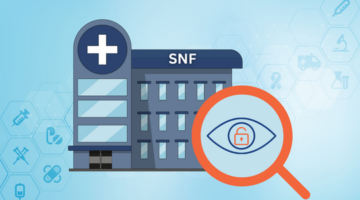
What if health plans could identify member decline before an avoidable hospitalization occurs? Real-time clinical visibility into long-stay SNF members uncovers risk earlier and drives better outcomes.

A survey of 112 health system executives finds that Epic's hold on hospital IT keeps getting stronger — but startups still have a shot, provided they solve a specific problem, prove strong ROI or offer a product that Epic is lagging behind on.

CMS's new framework sounds like a gentle opt-in. There’s no requirement to meet every standard on day one, just a commitment to work toward doing the right thing. That sounds great. But to actually participate in the network, you have to meet a baseline level of interoperability.

The most common and most expensive misunderstanding in healthcare cloud strategy is treating the cloud as a destination you either reach or you do not, when it is really a progression through five distinct stages, each one unlocking capabilities the stage before it could not support.

Done well, NICU UM is so much more than an approval process. It is a clinical credibility engine that — when integrated with Case Management (CM) — drives every NICU admission toward the most appropriate, impactful care.

The question is not whether the technology is impressive. The question is whether it shows up at the right time, with the right information, inside the workflow where the decision is being made. Anything else is just another report.