
Why the Wealth of Data From Wearables Are Important for Consumers and Clinicians
Growing use of wearable technologies and the data they produce was discussed by a panel at the MedCity News INVEST Digital Health Conference in Dallas.
Growing use of wearable technologies and the data they produce was discussed by a panel at the MedCity News INVEST Digital Health Conference in Dallas.

Why should Medicare determine who is qualified to provide remote monitoring by asking who employs the nurse, rather than who is accountable for the patient's care?

Healthcare decision-makers, especially at pharmaceutical companies, must prioritize patient input. Data collected from social media listening is a significant step in the right direction.

Fractyl Health reported positive six-month trial results from an investigation of its Revita procedure last week, but shares of Fractyl stock dropped steeply on October 16 immediately following the announcement. Despite the positive findings, the stock’s sharp decline highlighted a contrast between the clinical findings and the market’s response.

The FDA recently published draft guidance on pre-market testing for robotically-assisted surgical devices, raising timely discussion around whether hospital infrastructures are capable of supporting increasingly complex systems.

The FDA is recruiting to fill vacancies on its advisory committees, informally known as adcomms. While these committees have met less frequently during the Trump administration, more meetings have been scheduled since former Commissioner Marty Makary left the agency in May.

What are the common reasons that a prototype fails to make the transition? There are several, but they all boil down to early-stage programs ignoring the business problem in favor of the technology problem.


Medical students, residents, and fellows are not waiting for formal guidance on artificial intelligence before putting it to use.

Today, 3D modeling and printing technology can make a dramatic impact — even shortening some operations by 30-90 minutes. Looking ahead, that reduction will only grow as the technology is further integrated and becomes more advanced.

Non-surgical implantable BCI is increasingly capable of matching surgical performance while transforming the risk-benefit equation, and it is now the most credible path along all three dimensions simultaneously.

The evolution of patient-matched medical devices represents more than just innovation in manufacturing and design. It marks a shift in clinical philosophy. Instead of shaping patients to fit implants, clinicians and device developers are harnessing technology to shape treatments around the individual.

These products have yet to offer treatment solutions designed to get users from their current health state to a desired future health state. This creates a massive, untapped opening for tools that move people from awareness to action in a clinically meaningful way, without the cost and access barriers of engaging the healthcare system or requiring a prescription.


We have the opportunity to design systems that give people greater capacity for the work where human presence matters most: listening, understanding, reassuring, deciding, and caring.

For consumers and clinicians the difference between “FDA-cleared,” “FDA-registered,” and general wellness products is not always obvious. Clear communication about intended use and supporting evidence is essential for maintaining trust.
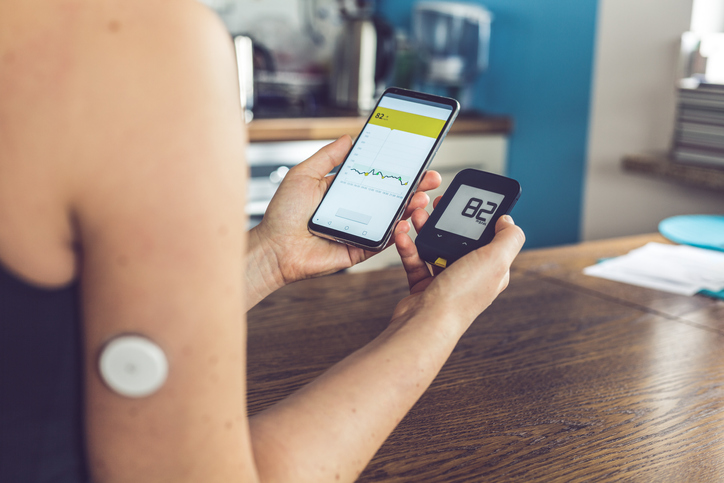
If CMS and private payers are serious about whole-person health, reimbursement structures must align with the workforce actually delivering that care. Payment pathways should recognize the value of the broader care team and enable the seamless integration of their expertise with the objective data generated through connected devices and programs like RPM.

For patients, recalls can fail to protect them — not because they came too late, but because they stop at notification and never fully translate into action.

For providers, the rules mean more control over monitoring and the chance to keep a larger share of reimbursement. For device companies, they create a chance to show measurable value and guide clinicians through a system that is shifting quickly.
Companies can avoid this trap by treating future growth as a foundation, not a later stage. Decision makers need to work backwards from scale, building software architecture and commercial architecture together. This shift alone helps teams make smarter choices within the first 90 days of a product’s launch.