
Prioritizing Patient Care: Medical Technology Innovations on the Horizon
The MedTech industry is poised for breakthroughs, owing to the rapid integration of digital ecosystems and technologies like AI and cloud.
The MedTech industry is poised for breakthroughs, owing to the rapid integration of digital ecosystems and technologies like AI and cloud.

Each track will spotlight a different specialty area including: oncology, cardiology, women's health and preventing burnout/supporting operational efficiency.

In a landscape where complexity has long been the norm, the power of one lies not just in unification, but in intelligence and automation.

Providers who don't take advantage of AI will get "left behind," said Dr. Shantanu Gaur, founder and CEO of Allurion Technologies, during a panel discussion at INVEST Digital Health.

Johnson & Johnson released research this month showing that its system for robotic-assisted bronchoscopy helped physicians achieve an over 15% improvement in overall diagnostic yield compared to traditional bronchoscopy. This could mean that fewer patients will have to “wait and see” while their cancer potentially gets worse.

Investment trends will be a big theme at the HLTH event at the Las Vegas Convention Center October 8-11. In the runup to the conference, investors from Bessemer Venture Partners, Cleveland Clinic Innovations, Third Culture Capital and Intuitive Ventures offered their takes on 2023 investments.

Medtech funding reached its low point in the first quarter but will slowly pick back up over the rest of 2023, according to a new Pitchbook report. It noted that this year’s medtech funding total will not come close to the $19.7 billion the sector raised in 2021, and it might even come in below last year’s funding total of $13.5 billion.


Across the nation, state-based health insurance exchanges are searching for ways to better serve their communities while making enrollment easier, more personal, and more accessible for everyone.

Medtech companies should be particularly mindful of the following legal and regulatory compliance issues. This is especially true for companies transitioning to data-based services.

From streamlining long-held manual processes to creating entirely new diagnostic devices, new tech is cropping up all over the medtech industry—resulting in a real-world impact on patients' quality of life.

Executives from Huma, Abbott, Smith & Nephew and AliveCor share how they are using real world evidence collection to support remote patient monitoring, maximize patient engagement and navigate the regulatory landscape.

Huma plays a vital role in leveraging its digital infrastructure to help medical device companies navigate the regulatory complexities of generating RWE.


Greenway Health blends smart technology with human expertise to elevate revenue cycle.

The industry faces challenges from inflation to labor shortages, according to an annual report from EY. However, there are grounds for optimism and areas to focus on, such as patching up supply chains.

A look at how tapping real world evidence from medical devices and patients could be a game changer, improving patient-clinician communication, supporting earlier interventions and helping patients manage their condition.
An upcoming webinar sponsored by Huma will highlight three aspects of remote monitoring: real world data collection, supercharging patient engagement and navigating the regulatory landscape. Register today!
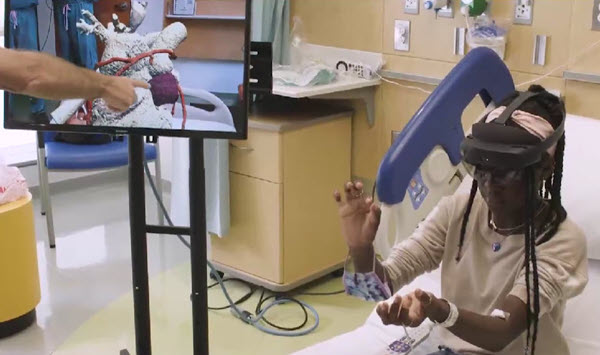
A pediatric health system enlisting mixed reality and 3D printing technology illustrates how clinical collaboration and patient education can improve patient outcomes for complex procedures.

BrightInsight developed the Disease Management Solution to help biopharma and medtech companies bring their Software as a Medical Device (SaMD) to market faster, according to BrightInsight CEO and Co-founder Dr. Kal Patel.