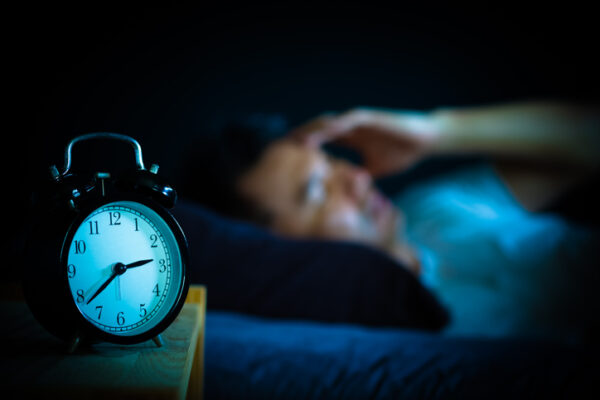
Almost half of Americans do not wake up “feeling rested” on most days, according to a new report from the U.S. Centers for Disease Control and Prevention (CDC). This should be a wake-up call for clinicians to ask their patients more about their sleep, provide screening tools, and refer to specialized care.
Despite growing public interest in sleep optimization and wearables, the CDC data suggest that a substantial proportion of Americans continue to experience symptoms consistent with inadequate sleep quality, excessive daytime sleepiness, or potentially undiagnosed sleep disorders.
With so many Americans exhausted, the consumer sleep wellness industry is thriving, and the media has followed along, framing America’s sleep problem as something that we should be able to optimize, bio hack, or buy our way out of on our own. Yet, despite the silk masks, oils, and sleepy girl mocktails swirling around social media, one of the greatest causes of non-restorative sleep is rarely mentioned by wellness influencers online: actual sleep disorders.


The Healthcare Payments Industry Faces a Perception Challenge
Healthcare payments are no longer about transactions. It’s about controlling the revenue cycle. And increasingly, that control is not sitting with ISOs.
One in five people lives with a chronic sleep disorder. Symptoms such as persistent fatigue, excessive daytime sleepiness, cognitive impairment, mood instability, or non-restorative sleep are often attributed to lifestyle factors, stress, or aging, yet may also reflect underlying conditions such as sleep apnea, narcolepsy, chronic insomnia, restless legs syndrome, or circadian rhythm disorders.
Yet, the majority of people living with sleep disorders remain undiagnosed. Of course, it’s easier to believe that better sleep is just a pillow or melatonin shipment away, rather than face a chronic medical condition, so how can clinicians help patients consider the possibility of a sleep disorder?
I know from personal experience how easy it is to get stuck on the sleep wellness hamster wheel. As a teenager, I was athletic, energetic, and highly motivated. Around age 18, as a Division I athlete at Brown University, my eyes began to feel extra heavy in class, so I started going to the bathroom to pinch myself and splash cold water on my face. I purchased energy drinks before sports practice and the library’s coffee cart became my late-night hangout.
Excuses came easy: everyone is tired in college. I wasn’t a night owl or a morning person. I hadn’t had enough caffeine or I’d had too much.


Automation Didn’t Dehumanize Care. Bad Systems Did.
We have the opportunity to design systems that give people greater capacity for the work where human presence matters most: listening, understanding, reassuring, deciding, and caring.
Starting law school at age 22, I finished reading legal cases only to realize I didn’t remember what I just read. Maybe I wasn’t meant for law school. Honestly, I didn’t question my sleep. I got 8-9 hours and thought I was “great sleeper” compared to friends who struggled to fall asleep.
At age 23, I woke up in the parking lot of law school unsure how I got there. I’d gotten a full night’s rest, ate breakfast and started my 15-minute commute. I remembered feeling tired about a mile from school. Yet, there were no pictures in my head of pulling into campus or choosing a parking spot. Grabbing the steering wheel with shaking hands, I thought for the first time, “This is not normal. Maybe I have a sleep problem?”
A few weeks later, I went to a primary care doctor and admitted that I was tired all the time and having trouble studying and driving. The doctor responded, “Everyone has trouble driving at times, even I pull over for a coffee sometimes.”
At the time, I didn’t realize that medical professionals, on average, receive less than two hours of education on sleep health and sleep disorders during their entire medical education. I just knew something wasn’t right.
Four months later, a sleep specialist diagnosed me with type 1 narcolepsy, a serious neurological condition in which the neurotransmitters regulating the sleep/wake cycle (called orexin), go inactive. I’d thought narcolepsy was a joke from Hollywood portrayals but quickly learned otherwise as I started an intense regimen of medication twice a night and daytime stimulants. The treatments were far from perfect, but within a few months, I realized just how bad my sleepiness had gotten. I’d lost touch entirely with what true wakefulness felt like. Now, I had more time to think clearly, make connections, and remember what I read. I felt free.
Given consumer culture, Hollywood tropes, and limited awareness and education, people with sleep disorders often go 10 plus years with symptoms before clinical diagnosis. And we are the lucky ones. Millions of others are working, living, and driving around you with undiagnosed sleep disorders.
Without a doctor’s diagnosis and treatment plan, sleep disorders are associated with increased risks of motor vehicle accidents, workplace injuries, cardiovascular disease, metabolic dysfunction, depression, anxiety, and impaired cognitive performance. For teenagers, undiagnosed sleep disorders are associated with triple the risk of suicidal ideation.
For clinicians, the new CDC report is a reminder to ask patients about their sleep quality, and wakefulness. If patients describe persistent fatigue, brain fog, insomnia, drowsy driving, cognitive issues or mood instability, it’s important to help patients take next steps. To uncover sleep disorders that would otherwise remain undiagnosed for years, provide the Sleep Disorders Symptom Checklist-25 (SDSCL-25), a screening tool designed to identify signs and symptoms of 13 major sleep disorders, and refer patients to sleep specialists.
With the new CDC data showing just how many Americans are struggling with sleep, it’s time to go deeper than wearable scores and sleep-maxxing. As doctors know all too well, sleep optimization only works if the underlying biological systems are working well. For millions of Americans, these systems are not properly functioning. True optimization is addressing both sides, sleep wellness and sleep disorders.
Picture: yanyong, Getty Images
Julie Flygare, JD, is President and CEO of Project Sleep, a national nonprofit organization dedicated to raising awareness about sleep health, sleep equity, and sleep disorders, and empowering people with sleep conditions through education and advocacy.
This post appears through the MedCity Influencers program. Anyone can publish their perspective on business and innovation in healthcare on MedCity News through MedCity Influencers. Click here to find out how.