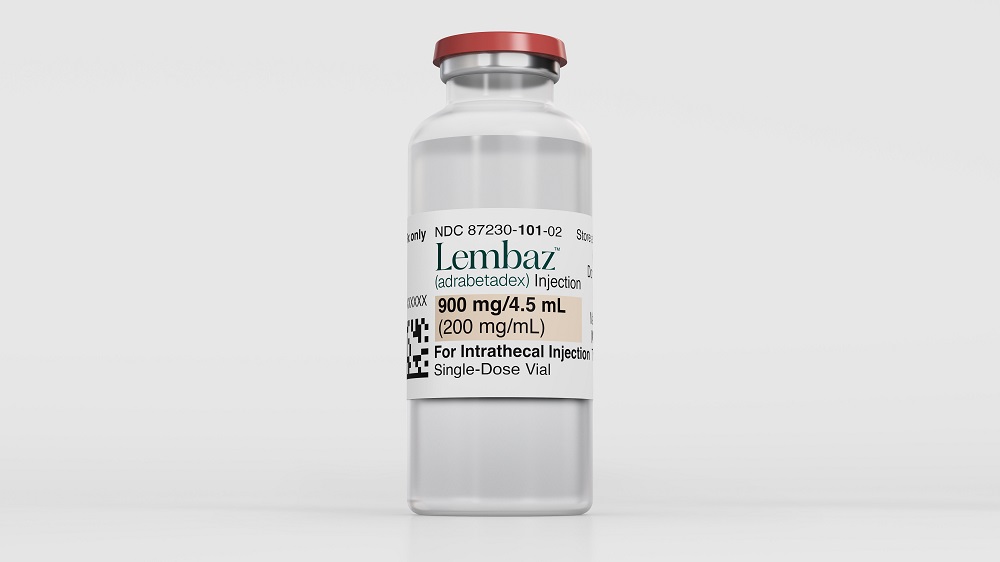
The cognitive and muscle problems caused by the rare inherited neurological disorder Niemann-Pick disease type C mean some patients do not live to adulthood. Supportive care was the standard treatment for decades, but in the past two years, the FDA has approved two drugs to treat the neurological symptoms. Now there’s a third FDA-approved treatment option, and it’s the first with data showing it helps patients live longer.
The Beren Therapeutics drug, Lembaz, is approved for reducing the risk of death in adults and children whose neurological problems with Niemann-Pick disease type C (NPC) started before the age of 6. The Nov. 17 regulatory decision is the latest stop in a winding 20-year journey that included overcoming perhaps its biggest obstacle, the failure of a pivotal clinical trial.
“This was a situation where the medicine didn’t fail the trial,” said Beren founder and CEO Jason Camm. “The trial failed the medicine.”


Top 7 Modern AI-Powered EAP Providers for Global Workforces in 2026
Discover the top AI-powered EAP providers for 2026. Compare platforms like Kyan Health and Spring Health on triage speed, global reach, and clinical quality to transform workforce wellbeing.
Niemann-Pick is named for two German physicians whose work in the early 20th century led to the characterization of the disease that bears their names. In the 1960s, additional research at the National Institutes of Health identified difficulty transporting cholesterol in cells as the underlying problem in this disease. NIH scientists went on to discover NPC’s genetic driver: mutations to the NPC1 or NPC2 genes that result in defective or absent NPC protein that’s needed for proper cholesterol trafficking. The resulting cholesterol buildup in neurons leads to the cognitive and muscle problems characteristic of this disease.
In 2006, the NIH began a natural history study monitoring disease progression in NPC patients. Additional research led to the discovery of cyclodextrins, a type of sugar molecule, as a potential treatment. Under the NIH, the cyclodextrin-based molecule completed Phase 1 testing.
Rare disease biotech Vtesse took over development of the drug candidate in 2015, advancing it to a Phase 2b/3 clinical trial. In 2017, Sucampo Pharmaceuticals acquired Vtesse in a $200 million cash and stock deal. The following year, Mallinckrodt bought Sucampo for about $1.2 billion. While Sucampo brought commercialized products to Mallinckrodt, the NPC drug, which took the scientific name adrabetadex, was identified as a key pipeline asset on track to a regulatory submission.
Months after closing the Sucampo acquisition, Mallinckrodt announced the NPC drug’s Phase 2b/3 trial had failed. At 52 weeks, the German company said results showed no separation between the treatment groups and the sham control arm in which a skin prick simulated the intrathecal injection used to administer the therapy. While Mallinckrodt said it hoped to find a path forward for the drug, opioid litigation led the company to file for bankruptcy protection in 2020. Mandos, a Beren subsidiary, purchased the NPC drug in 2021 while Mallinckrodt reorganized under bankruptcy court supervision.

How Innovation in BTK Inhibitor Development Is Improving Treatment Outcomes
BTK inhibitor has become an important treatment option for certain B-cell malignancies.
A New Path Forward
Before founding Beren in 2020, Camm was founder and general partner of Theil Bio Fund and managing director and chief medical officer of Theil Capital. Camm said he first encountered the cholesterol trafficking hypothesis in NPC in 2015. He was introduced to Hugh and Chris Hempel, parents of twin girls born with the disease who received the experimental drug through the FDA’s compassionate use program. Through the Hempels and other parents, Camm learned about the disease and the drug that would become Lembaz, which he said is based on “incredibly elegant biology.”
Camm said the flaw of the failed Phase 2b/3 trial was its design. In a neurodegenerative disease, to show prevention of decline on a composite endpoint, the control group has to decline, he explained. But there’s a good chance that decline won’t be observed in the span of one year.
Beren did not run a new trial. The company proposed to the FDA a new analysis evaluating survival across a larger group of patients over a longer period of time — all patients ever treated with the drug. At the time, this analysis spanned 10 years of data, Camm said. Treated patients were matched to an external control; this new analysis included the original NIH natural history study that spawned Lembaz 20 years ago. The survival analysis that supported Lembaz’s regulatory approval focused on patients who had neurological signs of NPC before reaching age 6.
The new results showed Lembaz-treated patients lived a median 8.5 years compared with a median 4.9 years in the external control. This outcome was achieved regardless of whether patients also took miglustat, a rare enzyme deficiency drug often used as an off-label NPC treatment. Last December, Beren submitted a new drug application for Lembaz.
In NPC, cholesterol buildup in neurons leads to cell death. Camm said Lembaz specifically binds to the accumulated cholesterol and gets it to be picked up by the normal pathways for trafficking the lipid. Beyond stopping the decline and death of neurons, Camm said Beren believes children’s brains can continue to develop because they’re able to form new connections.
“It’s a really nice mechanism that works on the cholesterol, the driver of the disease,” Camm said. “The ability to redistribute cholesterol where it’s needed is why we think we have such dramatic effects.”
In Lembaz’s clinical trial, hearing loss was one of the most common adverse effects reported. This risk is flagged in a black box warning on the product’s label. Clinicians are instructed to perform a comprehensive audiology evaluation to establish baseline hearing before starting treatment. Tests must be performed prior to subsequent doses to enable adjustments to mitigate the risk of permanent hearing loss.
A Competitive Edge in NPC
The first treatments developed for NPC were Miplyffa from Zevra Therapeutics and Aqneursa from IntraBio, both approved by the FDA in 2024. The way these drugs work to treat the disease is not fully understood, but both oral small molecules are designed to cross the blood-brain barrier. The regulatory decisions cover the treatment of the neurological symptoms of NPC.
Lembaz’s label states that the way that the drug works has not been fully characterized, but Camm said his company’s drug is the only one with data showing survival benefit. He added that NPC leads to difficulty swallowing, which presents challenges for oral dosing of the other NPC drugs. Lembaz can also reach younger patients. While the drug is approved for treating both adults and children, the FDA decision encompasses babies who weigh at least 7 kg (about 15.4 pounds) who have the infantile onset form of this disease. Meanwhile, Miplyffa is approved for patients age 2 and older while dosing of Aqneursa is weight based starting at 15 kg (about 33 pounds).
Beren plans an early December launch for Lembaz. The company is not disclosing the product’s list price until then. Last June, Beren raised $300 million to prepare for commercialization. The FDA approval also came with a rare pediatric disease priority review voucher, which Beren may sell to raise non-dilutive financing. Recent voucher sales have topped $200 million.
Publicly traded Zevra reported $88.9 million in Miplyffa sales for the first nine months of this year, a 45.7% increase compared to the same period last year. Aqneursa attracted the interest of Shionogi & Co., which is buying privately held IntraBio for $2 billion as part of its rare disease strategy.
Beren was incorporated as a public benefit corporation. While such entities are for-profit businesses, this legal status enables a company to name additional stakeholders beyond shareholders. Beren’s additional stakeholders are patients, caregivers, and the public health interest. As a public benefit corporation, Camm said Beren can make investments that maximize success for both patients and the company.
“We don’t want to be forced into short-term trade-offs when there’s a long-term goal for patient benefit and shareholder benefit,” he said.
Photo by Beren Therapeutics