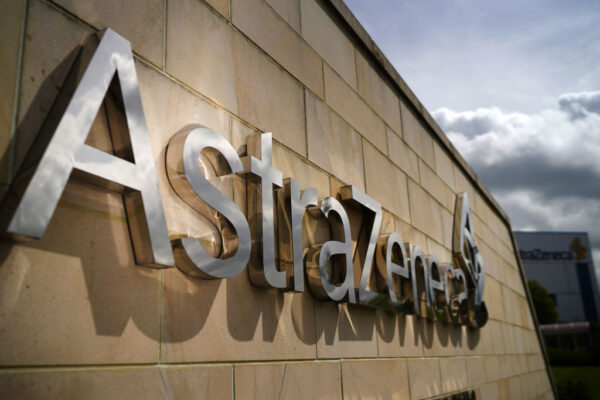
AstraZeneca is making a $2 billion equity investment in Summit Therapeutics, a business deal that also kicks off a research collaboration that could pursue multiple drug combinations with an initial focus on gastrointestinal cancers.
The deal announced after Monday’s market close is a vote of confidence in the Summit cancer drug ivonescimab, a bispecific antibody designed to bind to two targets, PD-1 on T cells and VEGF on cancer cells. Several oncology-focused pharmaceutical companies have already struck deals to add such drugs to their pipelines. Summit’s late-clinical drug gives AstraZeneca access to a contender in the class.
Ivonescimab was developed by China-based Akeso Therapeutics. Phase 3 trial results in lung cancer raised hopes for the molecule as data showed it beat Merck’s blockbuster PD-1 inhibitor Keytruda in a head-to-head study. But those results were from a trial in China, where the drug has approvals in lung cancers and is marketed by Akeso. For Summit, ivonescimab’s prospects ride on the results of clinical trials the company is conducting in outside of China. Summit holds rights to the drug in North and South America, Europe, the Middle East, Africa, and Japan.


Closing the Quality-Affordability Gap in Workplace Mental Health
In an interview, Kyan Health Co-Founder and Chief Commercial Officer Konstantin Struck discussed how Kyan gives mid-market and enterprise employers access to premium workforce mental healthcare, at a price point that is affordable.
AstraZeneca is a leader in the development and commercialization of antibody drug conjugates (ADCs) for cancer. The Summit deal gives AstraZeneca the opportunity to test its experimental ADC sonesitatug vedotin (sone-ve) in combination with ivonescimab. In July, AstraZeneca reported sone-ve led to statistically significant improvement in overall survival, meeting the main goal of a Phase 3 test in CLDN18.2-positive gastric cancers. Detailed trial results are scheduled for presentation at the upcoming European Society for Medical Oncology conference in late October. This medical meeting will also include the presentation of data for ivonescimab in biliary tract cancer. Last month, Summit reported preliminary Phase 3 results showing statistically significant improvement. This pivotal study was conducted by Akeso in China.
Drug resistance is one limitation of ADCs, but PD-1/VEGF bispecific antibodies may be able to help. In addition to bringing two distinct approaches to cancer, the dual mechanism also makes the tumor microenvironment more favorable to ADCs, which is hoped to overcome resistance.
The potential advantages of combining PD-(L)1/VEGF bispecific antibodies with an ADC has led to a flurry of dealmaking to explore such drug pairings. AbbVie, Bristol Myers Squibb, Merck, and Pfizer have struck business deals for bispecific antibodies in this class. Biotech companies are also striking deals. Late last year, Crescent Biopharma licensed a Kelun Biopharma ADC it plans to test in combination with its PD-1/VEGF bispecific antibody.
AstraZeneca’s new collaboration could extend beyond sone-ve. The Summit deal includes a non-binding memorandum of understanding that permits additional clinical trials testing ivonescimab in combination with other AstraZeneca cancer drugs, including other ADCs.

Why Pharma Companies Should Look To Social Media For Better Patient Insight
Healthcare decision-makers, especially at pharmaceutical companies, must prioritize patient input. Data collected from social media listening is a significant step in the right direction.
“A core pillar of our oncology strategy is to broaden the reach of our ADC portfolio as the backbone of treatment across tumor types with combinations alongside next-generation immunotherapies,” Susan Galbraith, AstraZeneca executive vice president, oncology hematology R&D, said in a prepared statement.
AstraZeneca’s Summit investment lends additional validation to the class of bispecific PD-(L)1/VEGF antibodies, Leerink Partners analyst Daina Graybosch said in a research note. But she also characterized the deal as “more tepid than an outright acquisition,” adding that while the collaboration may lead AstraZeneca to invest more in Summit, it’s also possible the pharma company learns from the trials and then licenses a competing drug in the class. That strategy has precedent. Graybosch pointed to a TROP2-targeting ADC that Merck licensed from Kelun. The deal happened after Merck reviewed data from clinical trials it conducted in collaboration with AstraZeneca and Gilead Sciences.
AstraZeneca’s agreement with Summit calls for the pharma company to buy about 108,955 shares of its new partner for $18.36 each, representing an 18.6% premium over Monday’s closing stock price. The companies will jointly contribute to the costs of the planned clinical trials, which they expect will be sponsored by AstraZeneca. Each company also retains development and commercialization rights to its respective molecules. The deal is expected to close by the end of this week.
Photo: Christopher Furlong, Getty Images