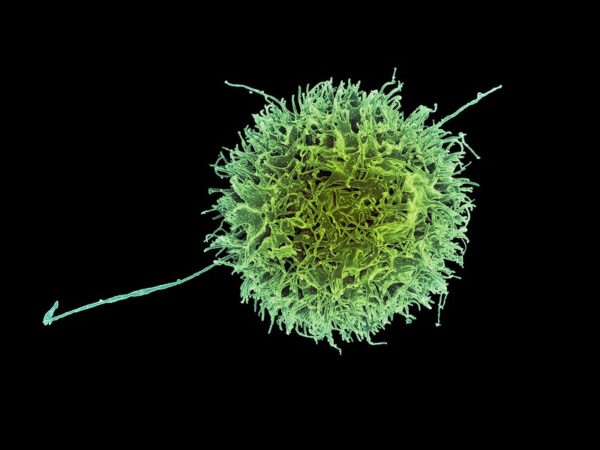
An Nkarta cell therapy made with a certain type of immune cell harvested from healthy donors led to improvement in two rare autoimmune disorders while also showing a safety profile the company says supports starting talks with the FDA about the regulatory path forward.
The preliminary results reported Monday are from two small studies, but they’re important because the field of biotech companies developing such natural killer (NK) cell therapies has dwindled amid setbacks, the most recent one affecting Nkarta’s closest competitor. Detailed data for Nkarta’s therapy, NKX019, are set for presentation this week during the American College of Rheumatology (ACR) annual meeting in Orlando
NKX019 is an allogeneic cell therapy made with natural killer cells from healthy donors. Those cells are engineered to bind to CD19, a receptor abundant on the surface of B cells. The engineered NK cells are intended to deplete the B cells that drive autoimmune diseases.

The Power Behind Enterprise EHR Software for Large Healthcare Systems
Enterprise EHR boosts scalability, interoperability, and governance for large healthcare systems.
B cell-depleting drugs are already available, such as the widely used Rituxan, a CD20-targeting antibody from Roche that’s approved for use in some cancers and autoimmune conditions. But the currently available drugs that deplete B cells offer short-term relief and efficacy, said Nadir Mahmood, president of Nkarta, speaking in an interview earlier this year. South San Francisco-based Nkarta is part of a growing group of companies aiming to reset the immune system to offer longer-lasting effects.
Mahmood said that as a field, medicine can assess what drugs are doing to B cells by measuring levels of these cells in blood. But much of the damage from an autoimmune disease happens in tissues where inflammation affects organs. Mahmood said a cell therapy should be better positioned to address that inflammation.
“Part of that hypothesis is that cells as a therapeutic are uniquely designed where they can enter the compartments and tissues where the bad-acting B cells behave and are doing their damage,” he said.
Nkarta is running two basket studies assessing NK019 in several autoimmune conditions. These open-label dose-escalation studies are enrolling up to 12 patients per dose level per indication. Each dose contains about 4 billion cells.

From Blind Spots to Better Outcomes: How SNF Data Transparency Strengthens LTSS
What if health plans could identify member decline before an avoidable hospitalization occurs? Real-time clinical visibility into long-stay SNF members uncovers risk earlier and drives better outcomes.
The preliminary data being presented at ACR are for two conditions: the inflammatory muscle disorder myositis, and systemic sclerosis, an inflammatory condition affecting the skin, connective tissue, and internal organs. The results reported in both myositis and systemic sclerosis are from patients who have had at least three months of follow up.
The myositis results show five of six patients treated with NK019 achieved moderate or major responses according to a scale that assesses muscle strength. In systemic sclerosis, six of seven patients achieved at least a 25% response according to a scale that assesses skin, lung function, physical function and other measures of the disease; five of the seven patients achieved a 50% response or greater.
Neither myositis nor systemic sclerosis has an FDA-approved therapy. The standard of care in both includes drugs that broadly suppress the immune system. In Nkarta’s announcement of the preliminary results, Dr. Guillermo Valenzuela, principal investigator of the clinical trial and founding medical director of Integral Rheumatology and Immunology Specialists in Plantation, Florida, said myositis and systemic sclerosis typically progress despite multiple lines of treatment.
“As a clinician who has cared for patients living with these debilitating conditions, I am encouraged by both the proportion of patients experiencing meaningful clinical improvement and the depth of responses observed,” he said.
Across the 40 patients treated so far in five autoimmune indications, Nkarta reported NK019 was safe and well tolerated at the three dose levels tested as of the Sept. 18 cutoff date. There have been no fatalities or treatment discontinuations due to adverse events. In particular, Nkarta noted there were no complications related to excessive immune responses, a known complication of cell therapies.
Prior to receiving NKX019, patients received toxic drugs as part of a preconditioning regimen that depletes a patient’s immune cells to prevent rejection of the therapeutic cells. The company said there were no cases of neurotoxicity, a known complication of fludarabine, a chemotherapy used in cell therapy preconditioning, including the regimen for NK019.
The risks of fludarabine in preconditioning are top of mind due to Artiva Therapeutics. Late last month, the company reported it is discontinuing its allogeneic NK cell therapy program, AlloNK, and winding down the business following two patient deaths, one of which was found likely to be associated with neurotoxicity from the fludarabine used for preconditioning. In addition to this safety concern, Artiva said results from longer-term follow-up in patients indicated insufficient durability of its NK cell therapy.
Artiva made AlloNK with NK cells sourced from cord blood; these cells do not undergo any engineering. By contrast, the engineering of Nkarta’s therapy to target CD19 on B cells should make these cells more potent. Nkarta said that based on the results for NK019 showing that T cells begin to recover before the Day 7 dose, the company recently amended the clinical trial protocol to compress the dosing interval. The company also plans to evaluate 6 billion cells per dose.
Ahead of the ACR presentations, Nkarta has scheduled a Monday 8 a.m. Eastern time webcast to discuss the data. Additional steps for Nkarta include plans to meet with the FDA to discuss a potential registrational pathway in both myositis and systemic sclerosis. For the first half of 2027, the company said it expects to report more clinical data from follow up in both indications as well as a plan for selecting the dose that could support an application seeking regulatory approval.