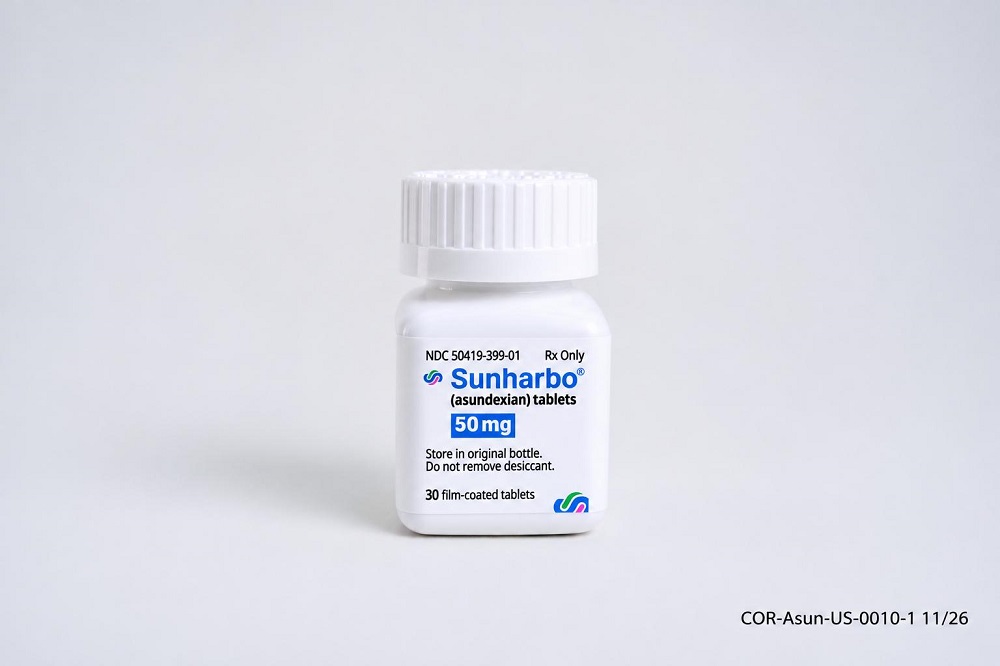
A Bayer drug that takes a new approach to preventing blood clots now has FDA approval, introducing a first-in-class medication for patients who have suffered a stroke.
The drug, asundexian, is a new treatment for secondary stroke prevention, which is reducing stroke risk following an initial event. The regulatory decision announced late Monday specifically covers adults who have recently had a stroke caused by a clot that did not originate in the heart. It also covers those who have had a high-risk transient ischemic attack, often called a “mini-stroke.” Bayer said its new once once-daily pill will launch in mid-November bearing the brand name Sunharbo.
Blood thinners have been a standard treatment for secondary stroke prevention, but such drugs come with a higher risk of bleeding problems, particularly with long-term use. Sunharbo goes after a new target. The drug is a small molecule designed to block Factor XIa, which reduces the generation of thrombin, an enzyme that plays a role in the formation of blood clots.

From Blind Spots to Better Outcomes: How SNF Data Transparency Strengthens LTSS
What if health plans could identify member decline before an avoidable hospitalization occurs? Real-time clinical visibility into long-stay SNF members uncovers risk earlier and drives better outcomes.
The Phase 3 trial for Sunharbo evaluated the study drug alongside standard antiplatelet therapies. Results showed a 26% reduction in the risk of stroke of any kind compared to a cohort that received a placebo and antiplatelet therapy. This reduction was achieved without increasing bleeding rates, which were comparable across both arms. The most frequently reported adverse reaction in patients who received the study drug was diarrhea. Detailed trial results were presented last February at the International Stroke Conference and published in April in the New England Journal of Medicine.
Sunharbo was internally discovered and developed within Bayer. While the German pharmaceutical company will be first to market with a Factor XIa inhibitor, competition is coming. Partners Bristol Myers Squibb and Johnson & Johnson are addressing the target with a small molecule called milvexian; Phase 3 data in secondary stroke prevention are expected by the end of this year.
Milvexian is a twice-daily pill. In an October research note, Leerink Partners analyst David Risinger said this less convenient dosing means the drug will need to achieve better stroke risk reduction than Sunharbo — 30% or greater — to justify market adoption. Milvexian is also in clinical development for atrial fibrillation, which is a larger indication. Sunharbo failed its Phase 3 test in afib three years ago. Bayer executives have also said the drug could be developed to treat other conditions but specific indications of interest have not yet been disclosed.
In a conference call last week to discuss third quarter 2026 financial results, Stefan Oelrich, head of Bayer’s pharmaceuticals division, acknowledged potential competition from milvexian. But he noted that Sunharbo has about a year head start and it has clinical data that build the case for differentiation.


The Healthcare Payments Industry Faces a Perception Challenge
Healthcare payments are no longer about transactions. It’s about controlling the revenue cycle. And increasingly, that control is not sitting with ISOs.
“Obviously, we believe that we have an extremely solid data set when it comes to secondary stroke prevention, where I think whoever comes there will come up with something really, really good if they want to beat us,” Oelrich said.
Other contenders pursuing Factor XI for secondary stroke prevention have turned to different drug modalities. Novartis’s Factor XI inhibitor is an antibody while newly public ADARx Pharmaceuticals is developing a small interfering RNA therapy.
China was the first country to approve Sunharbo, a regulatory decision issued late last month. The drug is still under review in Europe and Japan.
Photo by Bayer