26. Governors’ Pandemic Response
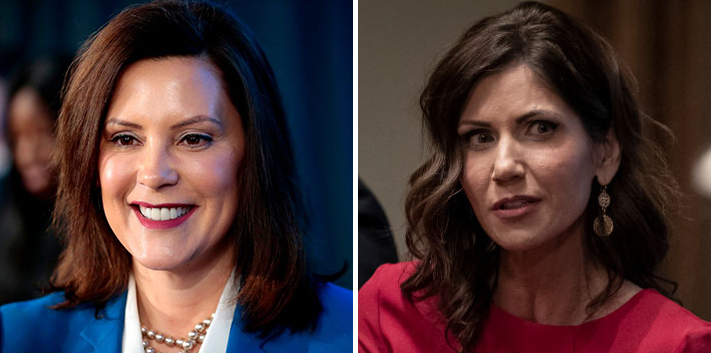
L: Michigan Gov. Gretchen Whitmer, R: South Dakota Gov. Kristi Noem (Photos: Getty Images)
With little to no cohesive direction from the federal government, especially early on, governors emerged as key leaders amid the Covid-19 pandemic. The state heads employed a variety of different tactics to snuff out the deadly new coronavirus, with varying results. Leaders like New York Gov. Andrew Cuomo and Michigan Gov. Gretchen Whitmer have been largely praised for their response to the pandemic, with Cuomo’s daily coronavirus briefings becoming a staple for New Yorkers, and Whitmer standing firm in her executive orders despite a terrorist plot to kidnap her. On the other hand, leaders like Florida Gov. Ron DeSantis and South Dakota Gov. Kristi Noem have been panned for their response or lack thereof. DeSantis has actively prevented local governments from instituting face mask mandates, while Noem allowed hundreds to gather in the state for the Sturgis motorcycle rally, which was later linked to a Covid-19 outbreak in Minnesota. Others like Maryland’s Larry Hogan took matters into his own hands when testing resources ran low, ordering hundreds of thousands of tests from South Korea — however, these tests were later found to be flawed.
27. Patients getting huge medical bills

Despite promises from insurers — and the White House — that the cost of Covid-19 care would be covered, many patients racked up huge medical bills. One patient who drove to the emergency room for a test in early March found that while his insurer covered the cost of the test, his emergency visit wasn’t covered. He faced a bill of nearly $2,000. Estimates on the cost of hospitalization vary widely, but one thing is clear: treatment is not cheap. Another woman who survived a long bout with the coronavirus faced a $75,000 bill after she left the hospital. All of this happened in spite of hospital relief funds from Congress stipulating that hospitals cannot hit Covid-19 patients with surprise bills.
28. The Looming NonCovid Health Crisis

While we’re optimistic about 2021 as populations will begin to get one of a few promising Covid-19 vaccines, it would be naive to imagine a back-to-normal scenario in healthcare. Childhood vaccinations have been missed, cancer diagnosis is down, and depression has tripled among U.S. adults. Starting next year, we will be forced to contend with a looming crisis of other diseases that have literally been shoved under the rug as humanity has battled the Covid-19 pandemic.
29. Big Tech v Covid-19

Tech behemoths, from Google to IBM, have been eager to help with the Covid-19 pandemic. For instance, rivals Apple and Google struck a rare partnership in April to develop a framework that would notify people when they had been in proximity with someone who tested positive for Covid-19. While more states have begun to roll out apps using this technology, it still has limitations. It cannot, for example, distinguish if there was a wall between two people who stood within six feet of each other. More importantly, it cannot replace the process of contact tracing, which involves the exchange of important information about where someone might have been exposed to the virus and what they need to safely quarantine.
30. Payment Parity

How telehealth visits are reimbursed in the future may be key to their staying power beyond the pandemic. When Covid-19 hit, Medicare changed policy to pay the same amount for virtual visits as in-person visits. Some states have also passed temporary measures requiring private insurers to pay the same amount for telehealth visits. And three states — California, Arizona and Washington — have laws that would require payment parity starting in 2021. But there’s still debate among insurers and legislators as to whether telehealth visits ought to cost the same amount.