
How Healthcare Leaders Responded to Trump’s State of the Union
Some healthcare experts supported Trump’s comments on lowering prescription drug costs, while others criticized his remarks on health coverage.
Some healthcare experts supported Trump’s comments on lowering prescription drug costs, while others criticized his remarks on health coverage.

As always, this year's HLTH conference brought a slew of announcements — from product launches to funding rounds to new partnerships. This list features short summaries for seven of the conference’s most notable announcements.


Greenway Health blends smart technology with human expertise to elevate revenue cycle.

Cedar recently launched a new set of features to bring the disconnected ecosystem of healthcare entities together and make billing easier to understand for patients. Pittsburgh-based payer Highmark Health and its health system, Allegheny Health Network, are the first customers to implement the product, which Cedar dubbed its “payer intelligence layer."
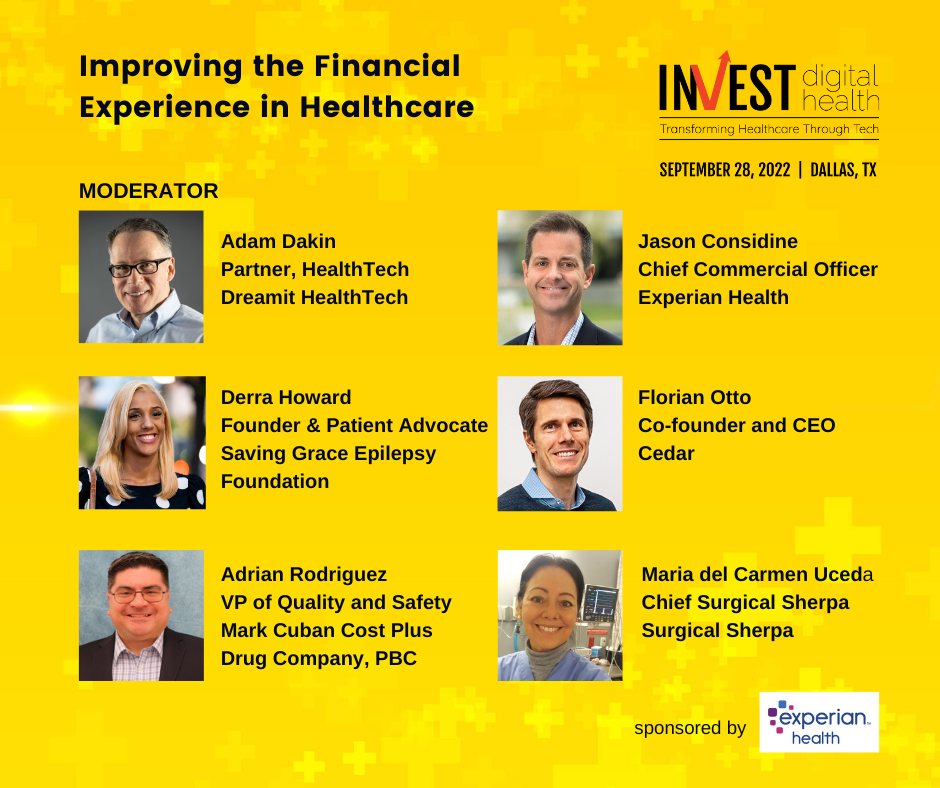
The patient financial experience in the U.S. is poor — patients have a hard time understanding pricing data and they often face exorbitant prices for care and medications. This problem will only get better if the healthcare industry rids itself of price-gouging middlemen and closed-door price negotiations held by businesspeople, according to a recent healthcare innovation panel.

Employee health benefits and consumer-focused digital health are the themes of the MedCity INVEST Digital Health conference in Dallas, scheduled for September 28, in collaboration with Health Wildcatters. Register today.

Experts believe CMS’ price transparency rule is flawed in its design because the highly complex billing data it is asking hospitals to post is too confusing for consumers to understand. The complicated structure of the healthcare system — from care variance to deductibles to billing codes — means that producing an accurate price estimate is virtually impossible. To improve compliance, hospitals will need health tech companies to step in.


How can AI benefit and improve patient outcome in the emergency department? Watch the latest episode to find out.

Even though payers and providers still struggle to effectively collaborate, health tech vendors can often act as a linking agent to improve outcomes for both sides.

At the INVEST Digital Health conference, scheduled for Wednesday, September 28, in Dallas and presented in collaboration with Health Wildcatters, healthcare experts will address a wide range of topics in the context of how employers are addressing healthcare needs of their workforce.

M&A activity in the healthcare finance technology is heating up, evidenced by large transactions such as Cedar buying OODA Health and R1 RCM buying VisitPay. Experts agree that this activity won't end anytime soon, and it will have a positive impact on providers and patients.

Healthcare payments startup Cedar acquired another billing startup, OODA Health, for $425 million. The deal would bring together billing tools for providers and payer onto one platform.

In a landscape where complexity has long been the norm, the power of one lies not just in unification, but in intelligence and automation.

Cedar, a healthcare finance technology company, saw its valuation jump to $3.2 billion after raising $200 million in a Series D funding round. It plans to use the new funds to expand patient touchpoints and build out new use cases.

In addition to human empathy, we are also seeing a new "digital compassion" emerging as healthcare providers work to support patients in need during this uncertain time. Showing this kind of compassion has become easier as technology becomes more advanced and patient-centric in response to the pandemic.

Read about new developments from healthcare startups such as NeuroFlow,TARA Biosystems and more.

Cedar, a startup developing billing software for health systems and physician groups, raised $77 million in venture capital and $25 million in debt.

Healthcare investing reached record new highs in 2018, hitting more than $30 billion across all sectors, according to numbers from Pitchbook.